
Why 'bleed' is so important in printing
- Feb 22
- 1 min read
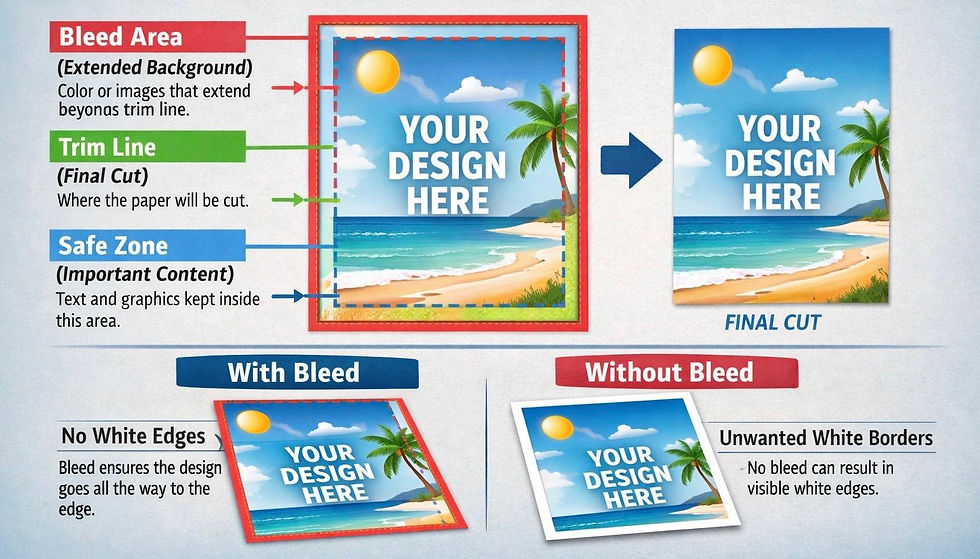
Bleed in printing refers to the extra area of artwork that extends beyond the final trimmed size of a printed piece. It is a crucial part of print setup because printed sheets are always cut down to size after printing, and this cutting process is never perfectly precise. Even with modern equipment, slight movement of the paper or minor variations in trimming can occur.
When a design includes background colours, images, or graphics that run to the edge of the page, bleed ensures that these elements continue past the trim line. This prevents unwanted white lines or borders appearing at the edges of the finished print. Without bleed, even a small cutting shift could expose unprinted paper, making the final product look unprofessional.
Typically, bleed is set to 3mm, although we do except files with 2mm. Alongside bleed, designers must also consider the safe area, which is the space inside the trim line where important text and logos should be kept to avoid being cut off.
When bleed is not supplied we either try to 'add' it where we can or we have to dead cut the job. To eliminate any white edges when doing this we may trim inside the desired finishing size. So for example an A4 document (297mm x 210mm) with no bleed supplied may end up having a finish size of 295mm x 208mm it depends on how close the
margins have been set in your document.
In short, bleed acts as a safety margin. It allows for accurate trimming, ensures full edge-to-edge colour, and helps deliver a clean, professional-looking printed result every time.


Comments